Prof. Dr. Sebastian Haunss

22. August 2026
by shaunss
0 comments

The Media Agenda-Setting Role of Protests in Nondemocratic Regimes: A Case Study From Hungary

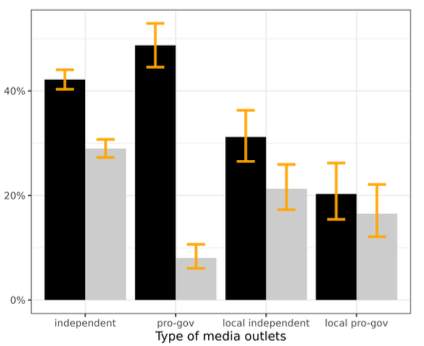
This study investigates how protests influence media coverage in a nondemocratic context, focusing on the 2022–2023 education-related protest wave in Hungary. Drawing on data from the Hungarian Protest Event Database (HuPED) and a corpus of 24,029 education-­related articles across 47 online news portals, we examine how different types of media—classified by political alignment and geographic scope—respond to protest activity. Using panel regression models, we find that only independent media exhibit a substantial agenda-­setting response to protest events, and only when protest intensity is high.

Continue Reading →
22. August 2026
by shaunss
0 comments
Protests in Germany 2000–2020. A dataset based on local protest event data in Bremen, Dresden, Leipzig, and Stuttgart

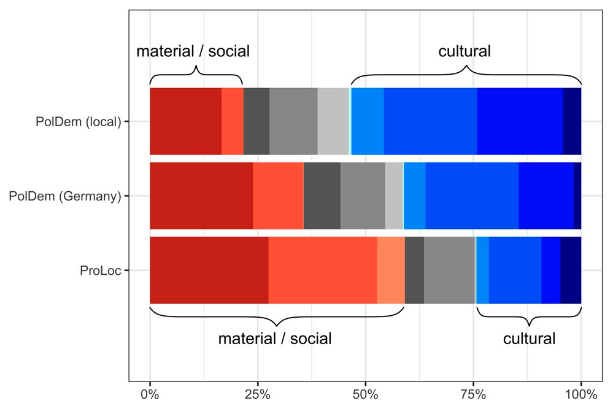
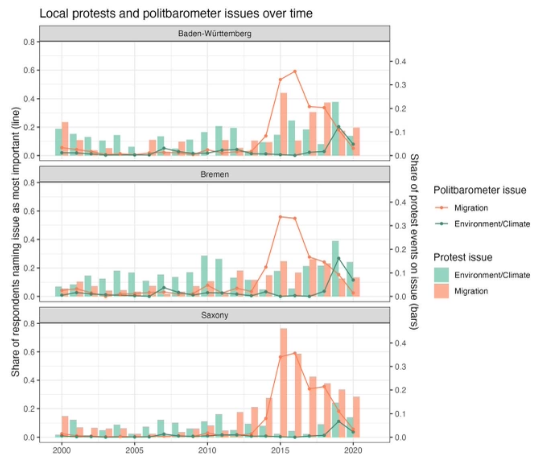
In exploring protest dynamics, Protest Event Analysis (PEA) has proven an indispensable analytical tool. Most existing PEA datasets, however, rely on national newspapers. This article introduces a local PEA dataset ProLoc based on local newspapers in four German cities (2000-2020). We show how this dataset with its 8,190 events allows a more detailed look into trends in protest mobilisation than the national perspective.

Continue Reading →

23. June 2025
by shaunss
0 comments

PAPEA: A modular pipeline for the automation of protest event analysis

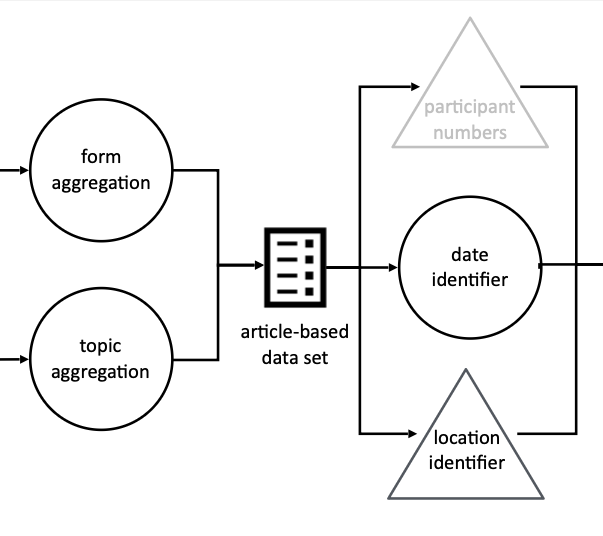
Protest event analysis (PEA) is the core method to understand spatial patterns and temporal dynamics of protest. We show how Large Language Models (LLM) can be used to automate the classification of protest events and of political event data more broadly with levels of accuracy comparable to humans, while reducing necessary annotation time by several orders of magnitude.

Continue Reading →

1. March 2025
by shaunss
0 comments

Protest Types and Protester Profiles: Testing Meso−Micro-Associations Between Event Characteristics and Participant Attitudes

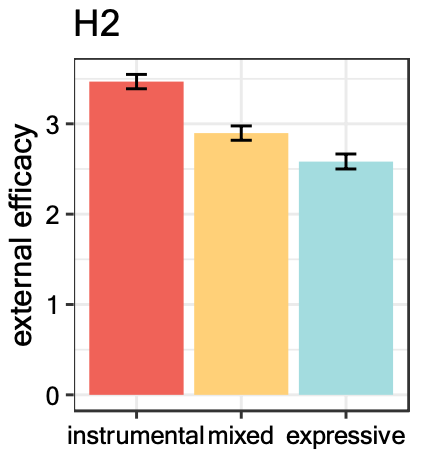
Can we infer individual characteristics of protest participants by examining the demonstrations they go to? Public debate and academic literature both tend to make such inferences from the meso- to the micro-level. This article tests whether this practice is empirically warranted.

Continue Reading →

19. July 2024
by shaunss
0 comments

Local protest event analysis: providing a more comprehensive picture?

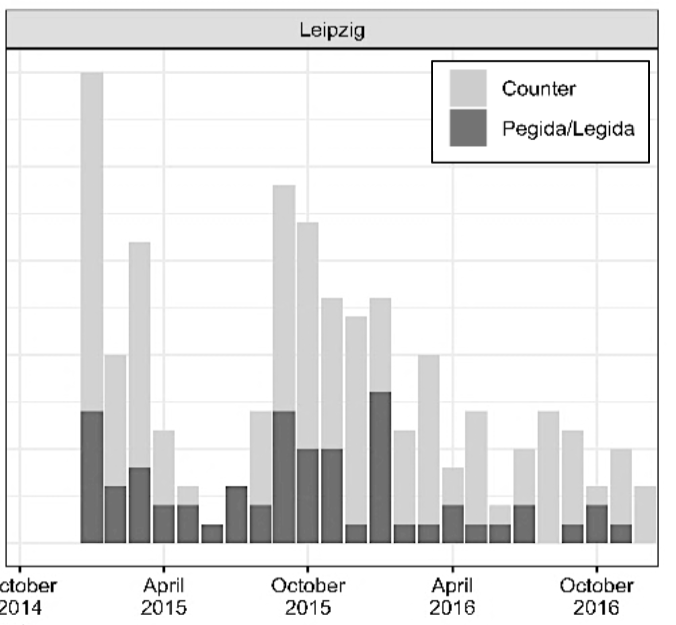
In exploring protest dynamics, Protest Event Analysis (PEA) has proven an indispensable analytic tool. Despite various improvements, PEA faces continuous challenges, notably the reproduction of media-specific selection biases. This research note aims to contribute to the literature seeking to mitigate these issues by exploring the potential of PEA based on local newspaper data, which tend to be less selective in their protest reporting.

Continue Reading →

19. July 2024
by shaunss
0 comments

Automatic Analysis of Political Debates and Manifestos: Successes and Challenges


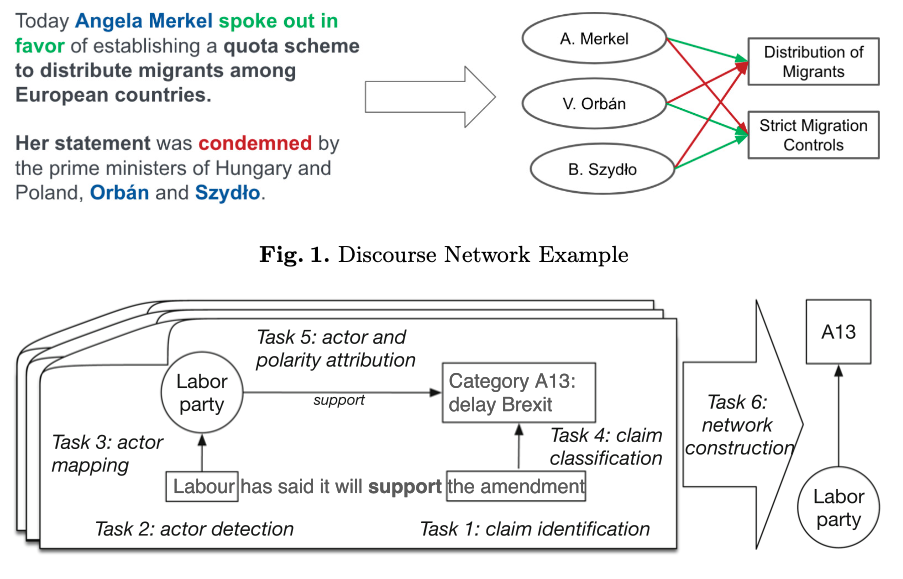
The opinions of political actors (e.g., politicians, parties, organizations) expressed through claims are the core elements of political debates and decision-making. Political actors communicate through different channels: parties publish manifestos for major elections, while individual actors make statements on a day-to-day basis as reflected in the media. These two channels offer different approaches for analysis: Manifestos, on the one hand, are useful to characterize the parties’ positions at a global ideological level over time. In contrast, individual statements can be collected to analyze debates in particular policy domains on a fine-grained level, in terms of individual actors and claims. In this article, we summarize a series of studies we have carried out.

Continue Reading →

16. December 2022
by shaunss
0 comments

Multimodal mechanisms of political discourse dynamics and the case of Germany’s nuclear energy phase-out

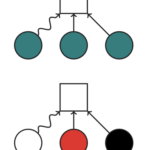
The 2011 policy pivot of the German government, from extending nuclear power plants terms to securing their shutdown for 2022, cannot be explained without looking at how the German political discourse network shifted in the months following Fukushima. This paper seeks to model and identify mechanisms that help explain how the two-mode network of political actors’ support for claims developed.

Continue Reading →